Future Cairns 2026: The Day the Far North Mapped Out Its Next 30 Years
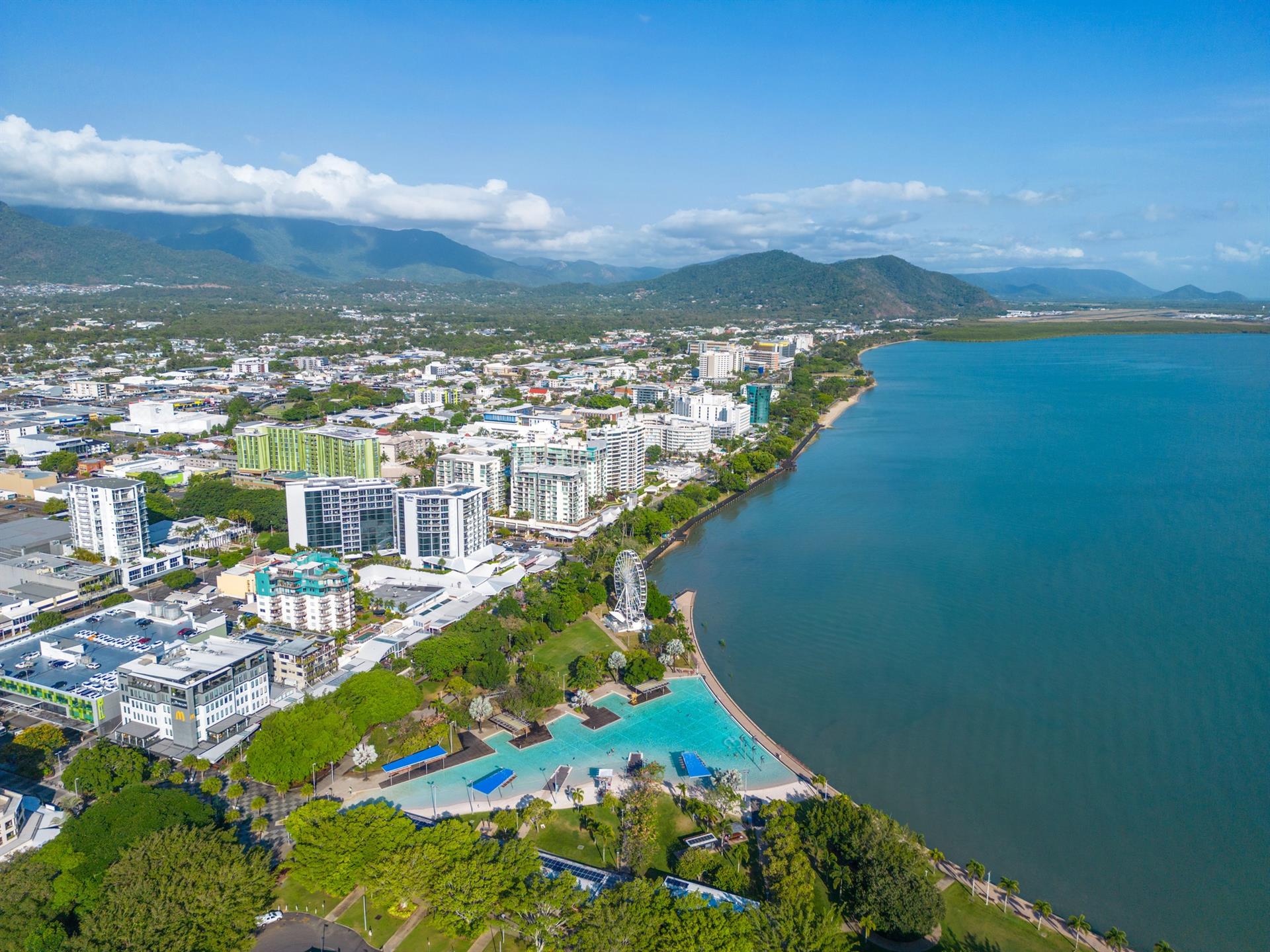
When Future Cairns 2026 convened in one of Crystalbrook Collection's flagship Cairns properties this June, it brought together an extraordinary cross-section of the people who will shape Far North Queensland over the coming decades. Politicians and mayors, hospital chiefs and hoteliers, farmers and fishermen, defence advocates and football coaches shared the same stage across an afternoon of speeches, panels and frank exchanges. A proud Cairns Post initiative, the event was billed as a conversation about the region's next 30 years — and it delivered exactly that: a sweeping, sometimes blunt, frequently optimistic stocktake of where Cairns stands and where it is headed.
A Welcome Rooted in Country and Community
The afternoon was opened by emcee Ann Wason Moore, a journalist with News Corp, who welcomed the room before handing the stage to a young woman whose story embodied much of what the day would be about.
Arroja Parkinson, an AIF scholarship recipient and Year 12 student at St Monica's College in Cairns, delivered the Acknowledgement of Country, paying her respects to the Traditional Owners of the land — the Gimuy Walubara Yidinji and Yirrganydji peoples — and to Elders past and present, extending that respect to all Aboriginal and Torres Strait Islander people in attendance.
Her own journey gave the acknowledgement particular weight. Parkinson's family lives in a remote island community off the Northern Territory coast, a two-hour flight from Cairns, and her parents sent her to boarding school in the city for the betterment of her education. The move, she said, opened doors she never thought possible — including meeting the Prime Minister as a winner of the AIF "If I Were Prime Minister" competition.
"For me, the future of Cairns is not just about growth, it's about balance," she told the audience — development alongside caring for culture and protecting the natural environment, so that young people from across the Far North, including remote communities like her own, have real opportunities to build their futures here. Her ambition after school is to work in humanitarian aid, helping those who haven't had the chances she has had.
Suzanne Wilson: A Masthead's Promise and Three Pillars
Suzanne Wilson, General Manager of Cairns for News Corp Australia, gave the official welcome, acknowledging the dignitaries in the room: the Honourable Jarrod Bleijie, Deputy Premier of Queensland; the Honourable Steven Miles, Queensland Opposition Leader; and Cairns Mayor Amy Eden, alongside federal, state and local representatives and business and community leaders. She also welcomed News Corp leadership — Sally Filkey, Group Executive Corporate Affairs; Laura Maxwell, Queensland State Managing Director; and Chris Jones, Editor of The Courier-Mail.
Wilson framed Future Cairns as the latest and most ambitious expression of a commitment stretching back well over a century, since Cairns was a fledgling port town with ambitions far greater than its infrastructure. Through every drought, cyclone and economic headwind, the Cairns Post has served as the region's record keeper, conscience and champion — asking hard questions, holding power to account and advocating for the people of the Far North.
She then introduced the event's partners as the three pillars on which the future of Cairns will be built: health, community and lifestyle.
The major partner, the Cairns and Hinterland Hospital and Health Service, is planning what Wilson described as nothing short of transformational: a health, innovation and surgical centre adding new operating theatres, extra day surgery spaces, more overnight beds, specialist outpatient services, a toxicology centre of excellence, a clinical trials hub, artificial intelligence capability and integrated research and training. The ambition is to position Cairns as a world-class tropical health hub — a globally significant leader in tropical medicine, infectious disease, climate health and marine-related conditions — while creating thousands of skilled jobs, attracting top-tier clinicians, reducing the need for patients to travel south and generating powerful economic activity.
The second partner, the Cowboys Group, was described as far more than a football club: part of the fabric of the community, setting down deeper roots in Cairns by anchoring a community development and high performance centre that will serve the region for decades, backed by a Reconciliation Action Plan among the strongest in professional sport and genuine pathways for local athletes.
The third, Crystalbrook Collection — in whose house the event was held — was credited with transforming perceptions of the city. Wilson quoted Crystalbrook CEO Geoff York's argument that Cairns has too long been viewed as a gateway people pass through on the way to the Great Barrier Reef or the Daintree Rainforest. With its Bailey, Flynn and Riley hotels, Crystalbrook has elevated the city's hospitality offering, attracting conference, lifestyle and international visitors who stay longer, spend more and return.
Deputy Premier Jarrod Bleijie: Housing, Defence and the 2032 Games
Deputy Premier Jarrod Bleijie, also Minister for Infrastructure and Planning, delivered the day's headline political address — and he came armed with numbers. Opening with a tribute to veterans and acknowledging his colleague Bree James, the Member for Barron River, he declared that Cairns and Far North Queensland are "on the precipice of something special." After what he characterised as a decade of decline, he said, the Crisafulli Government — elected in regional and rural Queensland — was turning the tide.
Housing: "Availability Equals Affordability"
The projection underpinning everything: by 2046, the Far North Queensland region is expected to grow by more than 350,000 residents.
One of Bleijie's first acts as minister was to bring the eight local councils together to redraft the Far North Queensland Regional Plan. Discovering the previous draft was headed for public consultation without the mayors having read or shaped it, he sent it to the councils instead, giving them 60 to 90 days to respond. They returned more than 200 recommended changes, and the government accepted roughly 98 per cent of them. The completed plan — co-signed with the mayors, released in Cairns two weeks before the event, and restoring an infrastructure plan to the framework — is the first of 13 regional plans the government has committed to delivering statewide before the end of 2028.
On supply, Bleijie pointed to round one of the Residential Activation Fund, which delivered $107 million in grants to Far North Queensland councils and developers across 21 projects, unlocking around 3,500 new homes. He also signed off on the long-stalled Mount Peter Priority Development Area south of Cairns — a decision "sitting on desks for years" — projected to create 18,500 new homes. Crucially, Mount Peter is one of three PDAs covered by a $2.4 billion infrastructure deal recently struck with the federal government, alongside Southern Thornlands in Redlands and Waraba in the City of Moreton Bay, funding the trunk infrastructure needed to actually get houses out of the ground.
His mantra: "availability equals affordability." Queensland has far too much demand and nowhere near enough supply, and the government is pulling every lever — declaring PDAs, running the $2 billion Residential Activation Fund (more than half spent outside South East Queensland), releasing state land through Economic Development Queensland, and abolishing stamp duty for first home buyers building or buying new, saving the average Mount Peter first home owner about $17,000. Around 60 per cent of current PDA buyers are first home owners, and a voluntary deed with developers commits 20,000 of the 51,000 homes released in Queensland under the federal deal to first home buyers. He took aim at opponents now lamenting a housing crisis he says they created over a decade, and at mandates that render projects unviable: better houses on the ground than vacant land mowed every fortnight for the kangaroos.
Defence and the Games
Defence, he said, is a huge opportunity for Cairns. That morning he had announced a $5.36 million contribution from the $180 million Sovereign Industry Development Fund to NORSHIP for its naval-certified servicing yard at Portsmith — the first such grant in Far North Queensland — with NORSHIP contributing a further $5 million itself. The facility will service more vessels and signal to partners, including Pacific island nations and the United Kingdom, that Cairns is a genuine destination for naval and maritime maintenance.
On the Brisbane 2032 Olympic and Paralympic Games, Bleijie stressed legacy over the event itself, pointing to the $7.2 billion venues deal struck with the federal government covering 17 minor and major venues. Cairns' Barlow Park is among them, growing from 1,700 seats to a 5,000-seat stadium, with design architects appointed and initial drawings under review. The regional spread is deliberate — sailing in Townsville, rowing on the Fitzroy River, equestrian in Toowoomba, whitewater rafting in Redlands, archery in Maryborough — because, he said, "it's the games for everybody."
The Q&A: Medal Events, the CUF and a Bad Federal Budget
Courier-Mail editor Chris Jones then pressed the Deputy Premier on the gaps. Why no medal event for Cairns when Townsville has sailing? Bleijie wouldn't rule anything in or out: sports allocation rests with the Brisbane organising committee and the International Olympic Committee, and once sports are settled, venues including the upgraded Barlow Park and the new Gabba arena will be considered. Jones translated cheerfully: "Medal event for Cairns, here we come."
On the Cairns Marine Precinct Common User Facility — the CUF — Bleijie was candid about what he inherited. First promised in 2021 (when, he noted pointedly, Steven Miles may have been the responsible minister), the project was handed to Ports North just before the 2024 election; on taking office, the new government discovered the true cost was roughly $800 million, more than double the original sub-$350 million estimate. The state has recommitted its share of the $387 million co-investment with the Commonwealth, and Transport Minister Brent Mickelberg, Ports North and federal Minister Catherine King are "on the verge" of a way forward. Pressed on what "verge" means, Bleijie offered: "Could be a day, could be two days, could be three days, could be next week." The message, he insisted: "We back it. We believe in the project."
On the federal budget, he predicted "dire consequences" for property investment and young people entering the market, criticising taxes on shares and what he called effective death taxes on inheritances. Asked about the federal Coalition's 18 per cent primary vote against the state LNP's 34 per cent, he claimed not to read polls — "but I get briefed on polls" — and said parties bounce back by focusing on what matters: the four election issues of health, housing, cost of living and crime. He cited a 7.6 per cent reduction in victim numbers in Cairns while conceding "people aren't feeling that on the ground," and promised further legislation including "breach of bail, go to jail." He closed with a flourish: businesses and families are fleeing Victoria in record numbers, and Far North Queensland is open for business.
Panel One — Towards 2050: The Billion-Dollar Hospital and the CUF
The first panel, moderated by Cairns Post editor Sean Jefferies, tackled the two projects most often called generational: the $1 billion Cairns Hospital expansion and the CUF. Joining him were Opposition Leader Steven Miles; Leena Singh, Chief Executive Officer of the Cairns and Hinterland Hospital and Health Service; and Jennifer Spilsbury, Chief Executive Officer of Advance Cairns.
Leena Singh: A City Within a City
Singh, who is steering the expansion, painted a picture far beyond bricks and beds. The funding creates a genuine health, education and innovation precinct — contemporary clinical and education facilities, research and clinical trials capability drawing private, public and international investment, while tackling health problems the Far North has carried for generations. The region has conditions found nowhere else in Australia, making it uniquely placed to develop solutions that will benefit generations to come.
By 2031, with stage one complete, the most visible change will be expanded clinical services: additional theatres and beds letting patients access elective and planned care far faster. The Far North carries a heavy daily emergency and trauma list — a consequence of its environment — which constantly competes with planned care; new capacity breaks that bottleneck. On training and retention, the partnership with James Cook University, now investing on the precinct, embeds university schools directly in the health service, while the state high school next door opens STEM opportunities. The bigger play is a knowledge economy distinct from the health economy — high-value jobs in AI, digitisation and research that let young people get educated in Cairns and stay in Cairns.
The precinct will function as "a city within a city." Several thousand people are already on site daily; the expansion aims to roughly double that to 4,000–5,000 patients, visitors, staff and students a day — a captured market for small business, retail and even on-the-doorstep childcare. Jefferies suggested a few more coffee shops and gyms wouldn't hurt; Singh agreed the coffee, at least, was essential for her clinicians.
Asked how Cairns signals globally that it is building a smart health economy, Singh said the region already punches above its weight in research and clinical trials — the task is to triple that, pursuing major international and national partnerships and multi-million-dollar trial facilities, because infrastructure attracts confidence and confidence attracts partners. She told the toxicology story with relish: arriving four years ago, she was warned about everything in the Far North that could kill you — dangers in the soil, the trees, the water. A couple of clinicians pitched turning that liability into an asset, and the toxicology centre of excellence was born — a story the Cairns Post recently put on its front page, complete with a couple of famously camera-shy toxicologists.
Jennifer Spilsbury: "We Want the Hand Up, Not the Hand Out"
Asked what concrete next step the region needs on the CUF, the Advance Cairns CEO didn't hesitate: "We want the announcement. We want the green light. We want the way forward. We want the start date. We're ready to go." The whole region is on the same page, she said. Projects like the CUF and the hospital expansion are the "shock absorbers" of the economy — industries that keep the Far North going regardless of global conditions, diversifying the base with ripple effects reaching well beyond Cairns.
Her investor pitch was emphatic: Cairns is the capital of Northern Australia — the north's most populous region, closer to Port Moresby than to Brisbane, the nation's front door to the world, with an international port, the seventh-busiest airport in the country and real strategic weight in national security. "I actually get a little tired of talking about the Far North and its potential," she said. "We have matured. Our time is now." Her 2050 vision: a leader in tropical expertise, education and knowledge; a place people choose for careers; a stronger voice in defence and in defining what Northern Australia means to the nation; a more vibrant CBD — and perhaps a few more hotels. Born in Cairns, she reminded the room the city has reinvented itself many times: she can remember the mudflats.
Steven Miles: Hypotheticals and Accountability
For Miles, the panel carried uncomfortable history. Jefferies put it directly: Miles was state development minister when the CUF was approved in 2021 with a roughly $360 million estimate that now sits north of $820 million — did he know before the last election? "The short answer is no," Miles replied, before finding common ground: both the hospital and the CUF "have to be delivered," the CUF leveraging existing shipbuilding capability as a vital economic diversification play. Pressed on whether the project would already be under way under Labor, he said yes — "we would have found a way sooner and it would be under construction now" — while conceding the hypothetical and pledging to hold the government to its commitments.
Jefferies also raised the Kuranda Range Road, close to his heart after years living up the range, where residents remain frustrated by prolonged repairs after Cyclone Jasper in 2023 and the prospect of relying on the current route for another two decades. Miles called the impact of closures on locals "diabolical," admitted the tunnel briefings he received in government "weren't particularly optimistic," and agreed all options need consideration. Jefferies spoke for many: the region has talked about a solution for more than 30 years while the road literally crumbles. "We need a fix."
Lisa Williams: The Polycrisis, Micro-Control and the Data on Cairns
Lisa Williams, Head of Growth Intelligence, Editorial and Product at The Growth Distillery — News Corp's consumer research arm — delivered a keynote that gave the day its most quoted concept: the "polycrisis."
The data is screaming one message, she said: Australians are exhausted, stretched, overloaded and profoundly unsure about the world. The cause is not one crisis but a convergence — economic, environmental, political, societal and technological disruption hitting all at once — and it has become a permanent fixture of Australian life rather than a dip in mood. One in two Australians report feeling significantly more stressed and overwhelmed than a few years ago, and around 56 per cent say they have nothing left in their budget after essential living expenses.
Humans aren't wired for constant uncertainty, so behaviour changes as a survival mechanism. Priorities shift toward safety, predictability and time with those closest to us. Overwhelmed people lean on fast, instinctive "System 1" thinking — automatic but error-prone — rather than deliberate "System 2" reasoning, filtering every choice through mental load and risk; when the load gets too great, they opt out of decisions altogether. And of the four traditional sources of influence — authority, information, community and affinity — Australians are drifting away from the first two toward the latter pair: what are people like me doing? The moment a voice sounds like distant corporate projection or empty advertising, audiences block it out.
But buried in the gloom is a gold mine. Australians are deeply pessimistic about the macro world yet stubbornly optimistic about their own micro worlds — 46 per cent remain fiercely optimistic about their personal futures — though that optimism is fragmented and domain-specific. The Growth Distillery's driver analysis found why: optimism is a direct by-product of personal agency. Control is the single biggest determinant of consumer optimism, and the pipeline holds in every domain — control fuels confidence, and confidence fuels spending and investment. The shift to deliver is the transition from crisis to control.
What It Means for Cairns
Cairns belongs to an elite handful of regional centres with populations above 100,000, having achieved 17 per cent growth over the past decade, with the most aggressive forecasts pointing to a further 23 per cent surge over the next ten years — regional growth actively outstripping the metros.
Financially, the city is a resilience story. Average household income sits slightly below the national average but is growing faster year on year than metro centres; savings balances look smaller but are growing at nearly double the national rate — 6 per cent against 3.5 per cent. And the real shield in a polycrisis is debt resilience: average loan debt in Cairns is just $385,000, a full 23 per cent below the national average. Locals are more likely than average to own their homes, hold higher superannuation and wealth-management balances, and want to put down roots. Cairns, Williams declared, can no longer be viewed from southern corporate offices as a holiday destination — it is a permanent, self-sustaining economic engine room for Queensland.
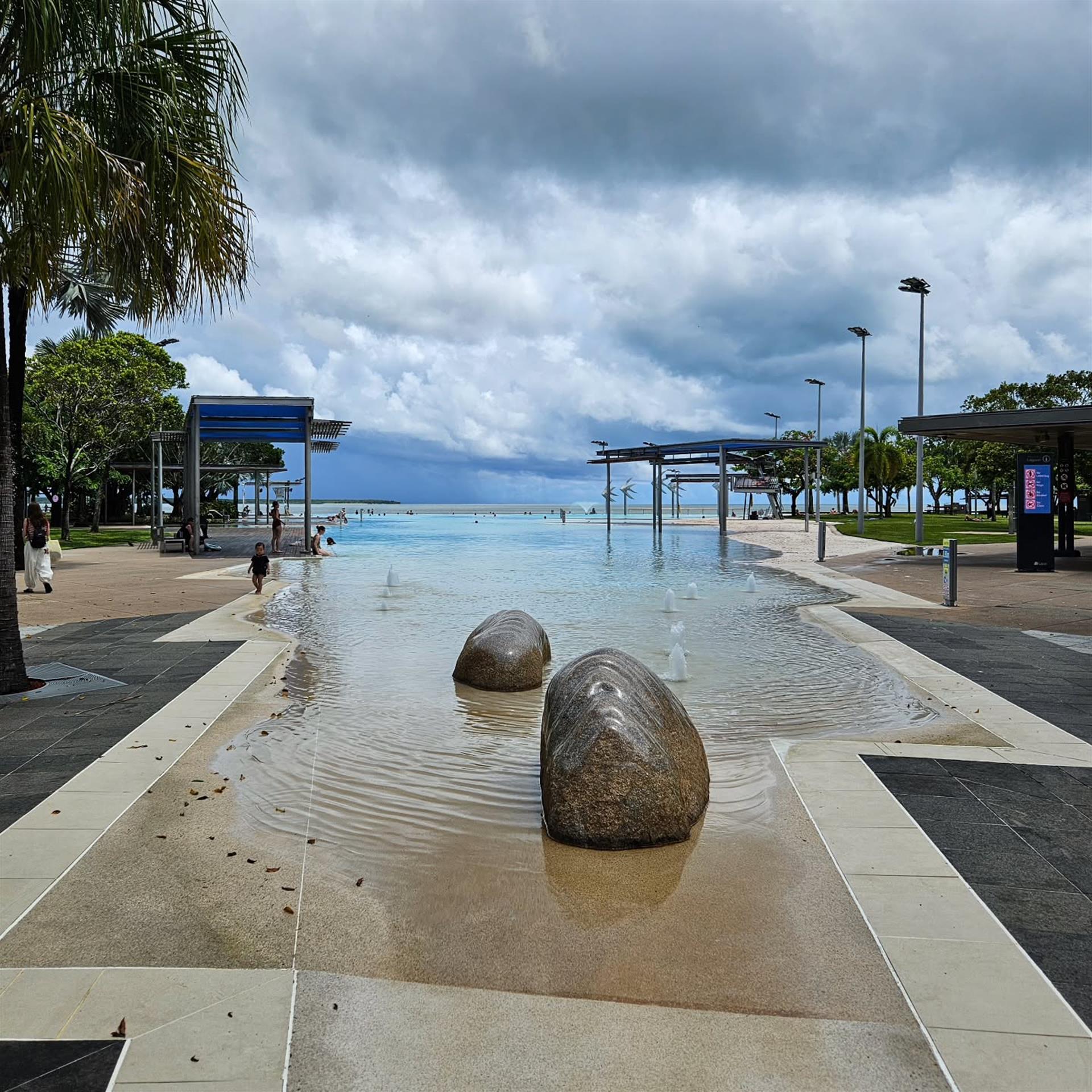
But the honest picture includes strain. The population is ageing, with a significant shift toward over-65s by 2050, and increasingly diverse, so local needs are fragmenting. In the Growth Distillery's sentiment tracker, Lighthouse, Cairns residents scored below the national average on nine of ten measures of personal life satisfaction, and the region sits in the bottom 15 per cent of SA4 areas for general happiness. Here is the paradox: the people of Cairns are fiercely proud but not blind. They rate the region exceptionally for natural beauty, social scene and freedom from capital-city traffic, yet are significantly more critical than average on housing affordability, crime and healthcare access, rate the area below average for usable green space, and call out issues like toxic masculinity at above-average rates.
Three Cracks to Talk To
Healthcare and aged care: 30 per cent of locals live with at least one chronic condition, yet only 53 per cent rate local health services positively, and across regional Queensland only 17 per cent feel confident the Support at Home program will meet their families' needs as they age. Huge investment is flowing — but the messaging isn't landing. People need to see real-life examples of people just like them showing how the investment changes daily life.
Liveability and mobility: Williams confessed her puzzlement that a city ringed by World Heritage rainforest and the Reef could score poorly on parks — until she understood the rainforest isn't an urban park where kids can kick a footy or families can safely walk a dog. Proximity to wilderness doesn't equal liveable urban infrastructure; the community needs usable shade and green space built into the CBD redevelopment and the new suburbs. On transport, eight in ten people say daily mobility options dictate where they live, work and study — yet only one in three care about abstract mobility technologies. They don't want to hear about EV infrastructure or San Francisco's driverless cars; they want to get from A to B easily and affordably.
Community and belonging: locals notice a more polarised society — as one local man in his fifties put it, people have become more polarised in the last five years. The antidote: 58 per cent of Australians say shared moments like festivals, local celebrations and sports finals create a unity hard to find elsewhere — yet an almost identical 58 per cent believe such moments are getting harder to find.
Her three takeaways: activate micro-control to overcome macro-pessimism by anchoring every message in day-to-day life; reframe infrastructure investments as lifelong safeguards rather than cold multi-million-dollar deals; and prioritise meaning over noise by investing in moments of belonging. Do that, and Cairns becomes a place where talent, investors and community builders put down roots.
Panel Two — Tourism, Sport and the CBD: First Impressions Count
After lunch, Tom Bowling, Head of Content for the Cairns Post, moderated a panel featuring Mayor Amy Eden; Crystalbrook Collection CEO Geoff York; Cowboys NRLW Head Coach Ricky Henry; and Fiona Pelling, Chief Executive Officer of the Cowboys Community Foundation.
The session opened with street vox pops, and the verdicts were candid: a young local who loves discovering the "really cool little shops"; a call for live music to return to a city centre with "no entertainment, only nightclubs"; a young parent praising the parks, Muddy's and Fig Tree Park but nominating safety and crime as the fix; a visitor who admires the mix of concrete and green but wants clearer transport signage; and a blunt resident describing shabby buildings needing a clean, and people lying in doorways — "you wonder, are they sick, or just homeless?"
Mayor Amy Eden: Investment Attracts Investment
Eden heard passionate people who can all see the city's potential, alongside genuine concerns. Her prescription: council must lead by example, because "investment attracts investment." The groundwork is done through the urban regeneration project; now the city needs more inner-city housing, a cooler and greener centre, and the transport links to connect the hospital precinct and Barlow Park rather than leaving them as islands. The challenges aren't new — "you could go back 100 years in the Cairns Post and read a story that could be literally yesterday" — but council hasn't made significant investment in the city centre for over five years, and with world-class natural assets and 2032 approaching, Cairns needs a world-class city to match. "Our city is our shop front. You only get one first impression... and unfortunately, that's where I think we're slipping." While she feels safe walking at night as a local, she acknowledged the city can feel frightening to others — tourists and suburban families alike — and committed to stronger safety partnerships with the state.
Fiona Pelling: The Cowboys Put Down Roots
Pelling brought news of the club's tangible expansion. She described touring the Cape York Hotel — guided by Cowboys identity Clint, whom she cheerfully embarrassed from the stage — and plans to work with Cairns businesses to bring that "iconic piece of architecture" back to life as a leagues club with a real Cairns feel: complementing the city rather than competing with it, and bringing employment and a new vibe to that end of town. On the community side, the Foundation already has staff in Cairns every second week delivering programs across the city, Cape York, the Torres Strait and the Gulf of Carpentaria, and hopes to bring its Dream Believe Achieve program north from Townsville, where it has moved people facing barriers to employment from social dependency into economic participation — a natural fit with the hospitality jobs a leagues club creates.
Geoff York: An Advocate's Honest Audit
York recalled building Crystalbrook "from nothing and just a name" from around 2016–17, when the company identified that Cairns simply needed hotels. Far from fearing competition, he wants more international operators in town, each spending destination-marketing dollars, because Crystalbrook's success "relies upon the success of Cairns." The company employs about 400 people across its three hotels, rising to around 500 in high season — often recruiting interstate, which collides directly with housing affordability.
On visitor trends: international holiday-maker numbers only clawed back to pre-COVID 2019 levels around March — underwhelming given roughly 20,000 new hotel rooms have opened nationally since, meaning Australia really needs 2019 numbers plus 20 per cent. Recent Middle East events have slowed (not stopped) the UK, European and North American markets, while Asia has surged: China is back with a changed dynamic — high-spending independent travellers, families and couples rather than shopping-tour groups — South Korea is up, and Crystalbrook has pivoted sales resources from the UK and Europe into Japan for the next year's growth.
Then came the day's most memorable anecdote. York's arrival the previous day began superbly — a great flight into an amazing airport, credit to Richard Barker and his team chasing more international airlines — and deteriorated instantly into "the most clapped-out taxi I think I've ever had." Micro-touches define the visitor experience, and a tired taxi is many tourists' literal first impression. He lamented the empty shopfronts and the departure of DFO, called for incentives to help landlords offer rent relief to fill tenancies, wished for another high-end retailer, and demanded better lighting so the city is as safe at night as by day: "I'd hesitate at night in some parts of town. I wouldn't go, and I'd tell people don't. Which is a shame."
He also championed the Cairns Convention Centre — praising Janet Hamilton's team — as critical to the city, delivering business through the shoulder months and feeding "bleisure" travel, where delegates stay extra days. Crystalbrook's $600 million investment across its hotels has made travellers re-look at the destination, and he pointed to the Esplanade dining precinct — which Crystalbrook pushed hard for under the previous council, with its Flynn hotel at the centre — as exactly the tourism infrastructure to build more of, giving Tourism Tropical North Queensland's Mark Olsen something world-class to sell interstate and overseas. One caveat: make it genuinely traffic-free.
Women's Sport and a Mysterious Phone Call
Ricky Henry looked ahead to a Cairns with a high performance centre and a humming leagues club: a city firmly on the rugby league map, drawing visitors, lifting local business and raising the Far North's profile as a league destination. On pathways, he wants players drawn from the region's own footprint rather than lost elsewhere, supported by the right systems so young women get their best shot at elite sport while keeping their support networks close.
Eden seized the theme: the Cowboys showed real courage coming to Cairns, and other codes are watching. The council's women's sport hub ambition is no slogan — "we want to do it because we're going to build it" — and she teased a "very exciting call" received that day about women's sport, refusing Bowling's attempts at a scoop. She rattled off the credentials: world-class swimming and tennis, Barlow Park on the way, direct international flights through an airport she insisted on ranking sixth-busiest in the country (gently overruling Spilsbury's seventh), a Queensland Hotels Association award for Crystalbrook's Riley the week prior — and even the famous humidity, "the new altitude" for training.
The panel closed on a possible tourist levy — or, as the Mayor preferred, a "destination fund" — following productive conversations in Brisbane with York and industry colleagues. The fund could support destination marketing, major events, city investment and community safety, and would be "a rate release" for residents. Her numbers made the case: council spends around $6 million on community safety, $4.5 million on the lagoon and Esplanade, $3.5 million on TTNQ and just $1.5 million on major events — far short of what's needed if Cairns wants to get serious.
Panel Three — Strengthening Our Regions: Agriculture, Fishing, Defence and the War on Tape
The final panel, moderated by Sky News host Jaynie Seal, brought together Adam Giles, Chief Executive Officer of Hancock Agriculture and S. Kidman & Co; Joe Moro, Chairman of Queensland Fruit and Vegetable Growers; Daniel McCarthy, founder of Big Fish Down Under; and Commander Alfonso Santos. With fifteen minutes on the clock, it produced some of the day's most pointed contributions.
Adam Giles: Logistics, Economic Zones and Less Government
On the new regional trade distribution centre at Cairns Airport, Giles zeroed in on cold storage logistics as the essential element: holding chilled and frozen commodities long-term and delivering them point-in-time, down the coast or overseas in the belly of aircraft. A plane has three components — business class, economy and freight underneath — "and if you can't fill the freight, you can't run an airplane."
On workforce shortages and regional tax concessions like the zone tax offset, Giles drew on long experience, having helped write Northern Australia policy in Darwin back in 2007. The key is using tax to draw people and capital north: cutting personal tax, stamp duty and payroll tax — both of which were supposed to disappear when the GST was introduced under John Howard — and reducing customs friction. He pointed to the roughly 7,000 economic development zones worldwide, across China, India, Dubai and Nigeria, and nominated Cairns as a prime candidate for an Australian special economic zone. He attacked federal settings penalising trusts — the vehicle through which so many small businesses start — and capital gains changes punishing those who build a business through blood, sweat and tears.
On the budget, he noted some 2.6 million Australians work in the public service — around 20 per cent of the workforce by his count — and argued for rationalising the triple-layered environmental regulation from Canberra, Brisbane and councils ("surely we can get rid of one of them"), abolishing the federal climate and environment bureaucracy in favour of Queensland managing Queensland, and decentralising departments — Tourism from Canberra to Cairns, Defence to Townsville. Since May 2022, around 5,000 new laws and regulations have come through Parliament, each demanding more administrators. His closer echoed Suzanne Wilson's pillars: people want health, community and lifestyle — "get out of our way and let us live our lives as we want to live them."
Joe Moro: Roads, Fuel and the Price of Water
For growers, Moro explained, everything comes down to moving product quickly: 90 to 95 per cent of produce from the Tablelands and the coast heads to Brisbane, Sydney, Melbourne, Adelaide and Perth, so network flexibility is critical when rain cuts routes — and growers want a new connection between the Tablelands and the inland road. The Iran crisis and its fuel spike hit bottom lines hard: transport companies passed costs through fuel levies only now easing, and while supermarkets helped some direct suppliers, wholesale-market growers absorbed the hit.
On water, Moro was sober. Funding follows sharing principles between users, state and federal governments, and loading costs onto users has made water too expensive for most industries to buy outright. Lakeland has a strong case for a dam, but even a project clearing every regulatory and environmental hurdle may price its water prohibitively. He cited the recent sale of around 11,000 megalitres in the Mareeba–Dimbulah scheme's modernisation project at a $3,200 reserve — a reasonable price, yet uptake was only about 50 per cent. Without government support to bring prices down, "I find it very hard to imagine a lot of dams getting built." His red-tape pick: the duplication between government regulation and the extra compliance standards supermarkets impose to protect themselves from litigation — "you need to remove one of them."
Daniel McCarthy: UNESCO and the Billion-Dollar Misconception
McCarthy delivered the panel's most combative case. Commercial fishing, he said, has been "pretty much all wiped out over the last couple of decades through successive governments on both sides of the political divide," including closures such as mackerel. He challenged the day's optimism with a statistic — regional population growth has actually been below one per cent for some time — making industry-enabling infrastructure urgent: duplicating or massively expanding the Kuranda Range Road, sealing the Peninsula Development Road up Cape York, and unlocking Lakeland, where growers already produce around $100 million a year and could, with a dam, produce a billion.
The common denominator holding it all back: "massive, excessive green tape" — and at its core, UNESCO. While accepting a global responsibility to protect the Reef and rainforest, he railed against a World Heritage Committee on which six member countries "do not have an inch of ocean frontage," yet will decide next month whether to list the Great Barrier Reef as "in danger." What's actually in danger, he argued, is the regional economy: Cairns is missing out on a billion dollars a year in tourism because the world's press has declared the Reef "dead, buried and cremated numerous times over." In thirty-odd years taking thousands of visitors out, not one arrived expecting the Reef to be in good shape. His one piece of tape to cut: tell UNESCO "we can look after our own backyard" — foreign committees ruling on the Reef, he joked, is like him coaching the Cowboys when he can barely follow the rules of football.
Commander Alfonso Santos: The Defence Dollars Skipping Cairns
Santos made the strategic case with history and hard numbers. The region's importance was proven in World War II, when the Battle of the Coral Sea — fought off this coast — turned the Japanese back for the first time. Yet some 85 years later, the 2026 Defence papers and Integrated Investment Program commit up to $16 billion to northern Australian infrastructure within roughly $225 billion of investment through to 2034 — "and there is no mention in there whatsoever of Cairns or Far North Queensland" beyond HMAS Cairns and works committed before the papers' release. He has raised it with council, state and federal officials, but no one has put their hand up for the region.
His prescription: a unified front across all levels of government and matched industry investment — applauding NORSHIP for putting $5 million of its own money alongside the state grant. He pointed to a proof of concept he helped engineer: bringing the British offshore patrol vessels HMS Spey and HMS Tamar to Cairns about four years ago, touring them through the shipyards and maritime college. They adopted Cairns as their unofficial base, conducting crew and ammunition exchanges here, with Tropical Reef Shipyard holding a maintenance program — "real tangibles for the region." His final plea: Cairns has the largest veteran community per capita in the country yet feels forgotten. He thanked Bree James and the Crisafulli Government for $1 million toward a legacy house and the council for the land, and called for $3.5 million in federal funding, with the Veterans' Minister due in town the following Monday. "If we're going to talk about our defence and our veterans, let's get serious about it."
In Conversation: The Cowboys NRLW Comes Home
The final session swapped policy for pathways, as Cairns Post senior reporter Aaron Singman sat down with Anita Krinon, the Cowboys' Head of Women's Elite Programs, and Tallulah Tillett, retired Cowboys NRLW halfback and Cairns product.
Krinon set the scene: the Cowboys entered the NRLW in 2023 and are heading into their fourth season, with round one in July. The club has built a culture that is "safe, connected and well resourced," and the move to Cairns is about extending that environment and creating genuine pathways. The Far North's talent pool needs no introduction — at least a third of the club's 330-plus NRL Cowboys have come from the region — and Krinon wants the same in the women's game, with local elite facilities meaning island and regional athletes no longer have to leave family and support networks for the south-east or Townsville.
She was practical about the semi-professional NRLW, where most athletes hold jobs outside the season. Townsville is currently nurturing three national sporting teams, leaving a shallow employment pool; Cairns — with its tourism and hospitality industries, the incoming leagues club and partners like Crystalbrook's Riley — offers a deeper well of work and career options. Moving out of the NRL team's shadow brings breathing room too: "There's been nothing but glowing support from the Cairns and Far North community... it's so nice to feel that wanted." Eventually she hopes the Cowboys brand lives across Townsville, Cairns and perhaps Mackay.
Tillett's story showed why it matters. Her career began at nine with the Cairns Kangaroos, but at twelve there were no established female pathways, pushing her into touch football — where she represented Queensland and Australia. Even returning to rugby league meant travelling to Brisbane for a competition, until the Northern Pride, under head coach Ty Williams, invited her to train with the men's squad for three years. "They treated me as if I was one of their own," she recalled, praising Williams — now involved in the Cowboys NRLW program — as an outstanding coach and person. At a trial game at Alley Park in Gordonvale a couple of years ago, the sight of so many young girls now playing league "actually made me quite emotional." With pathways now running from grassroots through the Northern Pride directly into the Cowboys NRLW system, she believes a Cairns high performance centre will be a game changer — especially for young Aboriginal and Torres Strait Islander kids across Cape York, the Gulf of Carpentaria and the Torres Strait.
Tillett also shared her Cowboys Community Foundation work, fresh from a road trip delivering programs in Mount Isa and Normanton. Her flagship, Try for Five, is a school attendance program in 20 primary schools across North Queensland — one of the Foundation's fastest-growing initiatives, credited with lifting attendance, student confidence and parent engagement — and one she'd love to see in every school from Cairns to the Torres Strait.
Asked what excites them most about the NRLW's growth, both landed on the same word: opportunity. For Krinon, it's young women pursuing financially viable sporting careers — plus the off-field economy of administrators, medical staff, coaches and trainers the women's game is opening up — powered by players who genuinely love community engagement on top of part-time jobs and training. For Tillett, it's the next generation of girls who, unlike her nine-year-old self, can see exactly where the dream leads.
The Wrap: A City That Knows What It Wants
Closing the event, Sean Jefferies — admitting to a few sleepless nights getting so many busy people in one room — distilled the day: a clear vision for the hospital expansion, with more care closer to home, stronger training and research, and precinct activation building a smart health economy; shared determination on the Common User Facility as a generational step for the maritime industries, with the Deputy Premier signalling movement within days; a call for practical fixes and long-term planning on the Kuranda Range and regional roads; and at the centre of it all, the CBD — the city's shop front, which must be safe, green and lively day and night, where small businesses thrive and the evening economy draws people in. The new Cowboys Leagues Club, he quipped, will no doubt help a few punters stay a while.
The Cairns Post's job, he said, continues as it has for over a century: convening conversations like this, tracking milestones, celebrating wins and calling out blockers so the community stays informed and its leaders stay focused. He thanked the panellists, partners and audience for their honesty, directness and ideas — and signed off with a grin: "Go the Cowboys. Especially the ladies."
Future Cairns 2026 was proudly supported by the Queensland Government, the North Queensland Cowboys and Crystalbrook Collection Cairns. If the day proved anything, it's that the Far North is done talking about potential. From the hospital precinct to the marine precinct, from Mount Peter's new suburbs to Barlow Park's new grandstands, from the Tablelands' farms to the NRLW's newest home — Cairns has the projects, the people and, increasingly, the impatience to build its next thirty years now.